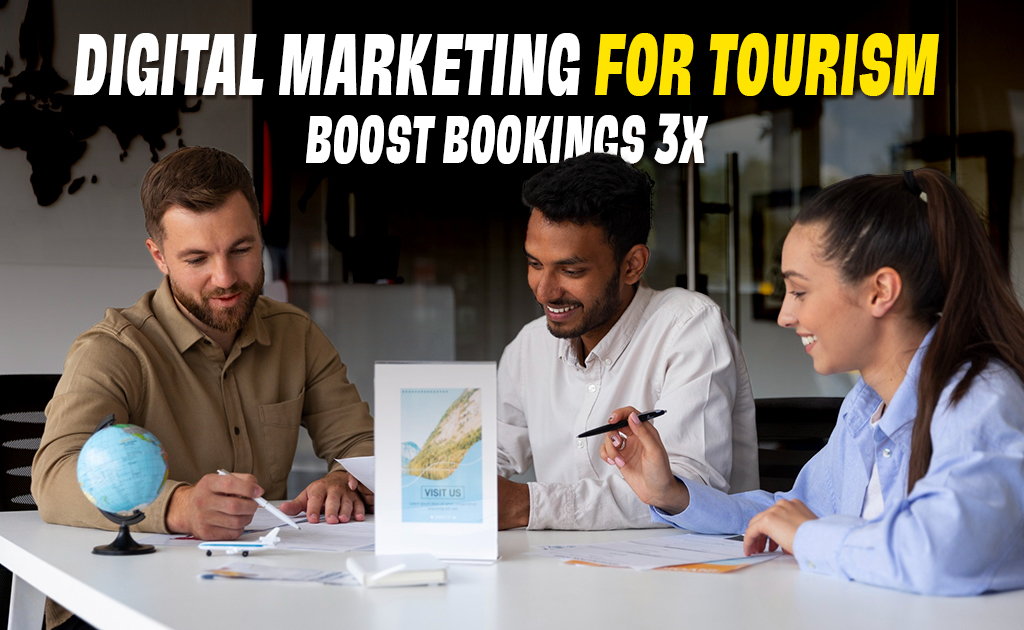
Digital marketing for tourism is the easiest way to turn travel dreams into confirmed bookings in today’s online-first world.
From the first “Where should I go?” search to the final payment, almost every step now happens on Google, social media, and mobile.
Table of Contents
What is digital marketing for tourism?
Digital marketing for tourism means using your website, SEO, social media, email, and online ads to attract travelers, answer their doubts, and convert them into paying customers.
Instead of depending only on walk-ins, agents, or word-of-mouth, you build your own system that brings steady enquiries all year round.
It is not just about posting offers or boosting random ads. True digital marketing for travel and tourism follows the traveler’s journey: inspire them, inform them, reassure them, and finally give them a simple way to book.
When each step is clear, users feel confident choosing you over dozens of other options.
Why tourism businesses need digital now
Most trips start with a quick search, a YouTube video, or an Instagram Reel. Travelers compare options, read reviews, and check photos before trusting any brand with their money and vacation time. If your business is not visible during these moments, you silently lose customers to competitors who are.
Digital marketing in tourism industry also levels the playing field. A small, well-run local operator can outrank or out-convert a bigger brand by focusing on long-tail, high-intent topics like “sunrise trek near Chennai,” “custom South India temple tour,” or “3-day Ooty family package from Chennai.” With the right strategy, you compete on clarity, value, and trust—not just price.
Core pillars of digital marketing for travel and tourism
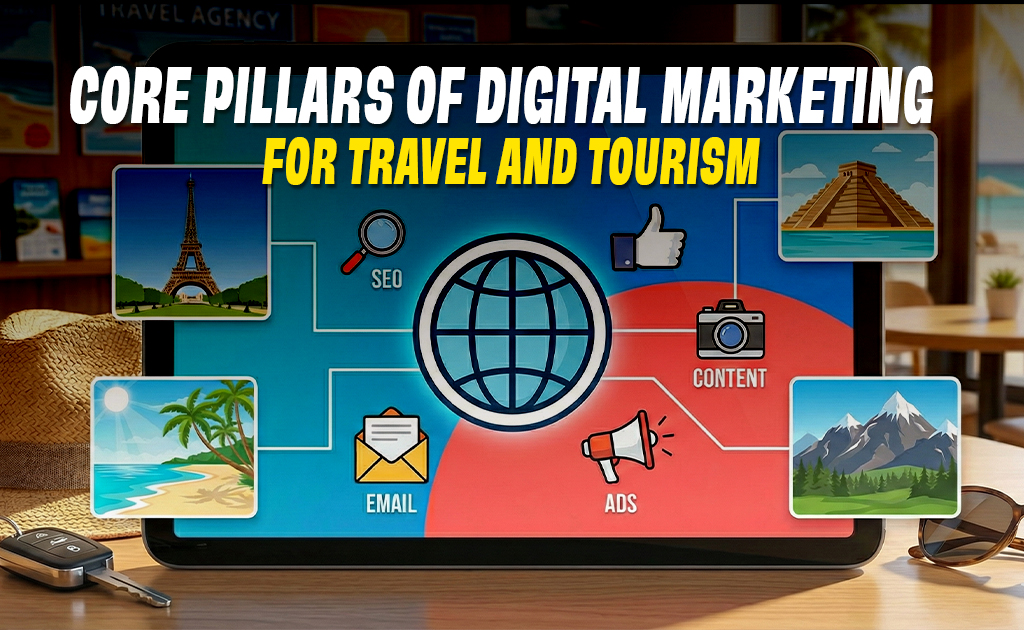
The most effective approach brings together four main pillars: SEO, content, social media, and paid ads. Think of them as pieces of one engine that moves travelers from curiosity to confirmation.
- SEO helps you appear when people actively search for trips and services.
- Content answers their questions and removes doubts.
- Social media inspires and keeps your brand visible in their daily feed.
- Paid ads push your best offers in front of the right people quickly.
When these pillars support each other, digital marketing for tourism feels natural, helpful, and persuasive instead of salesy or random.
SEO: foundation of digital marketing for tourism
SEO is the long-term growth engine behind digital marketing for tourism. It focuses on earning visibility in search results, so you keep getting traffic without paying for every click.
Start with keyword research around real traveler phrases:
- “Weekend trips from Chennai under 5000”
- “Best honeymoon packages Kerala from Chennai”
- “Family-friendly tours in South India”
Group these into themes—weekend getaways, international trips, pilgrim tours, corporate outings—and build separate pages for each. Every page should have:
- A clear title and meta description.
- Simple, benefit-driven headings.
- Short paragraphs and bullet points.
- FAQs that use natural language questions.
This makes it easy for both Google and users to understand your offer. Over time, this kind of structure helps your digital marketing for travel industry content rank for both main and related terms.
Local SEO and Google Business Profile
For many tours and travels brands, local SEO is where the highest-intent leads come from. People often search:
- “Travel agency near me”
- “Tours and travels in Chennai”
- “Best tour operator in [area]”
To capture this demand, your Google Business Profile (GBP) must be strong. Complete and regularly update:
- Accurate name, address, phone, and website.
- Business categories and services (e.g., tour operator, travel agency).
- Real photos of your office, team, vehicles, and trips.
- Posts about new packages, seasonal deals, and announcements.
Encourage every satisfied customer to leave a review, and respond politely to all feedback. This simple local optimization often delivers faster results than many advanced tactics and is a must-have part of digital marketing for tourism.
Content that answers real traveler questions
Good content turns your brand into a trusted advisor. When users feel you understand their fears and questions, they are far more likely to book with you.
Build content around what people actually ask:
- “What is the best time to visit Ooty?”
- “How much does a Europe trip from Chennai cost?”
- “Is it safe to travel with kids to [destination]?”
- “What documents do I need for an international tour?”
Write clear, honest, and practical answers in short paragraphs and bullet lists. Use simple language instead of jargon, and share real tips from your experience.
Social media: the visual side of tourism
Travel is visual and emotional, which makes social media a powerful pillar of digital marketing in tourism industry. One good Reel, Story, or short video can drive more enquiries than a long brochure no one reads.
Focus on:
- Real visuals: genuine photos and clips from your trips, not just stock images.
- Human stories: short testimonials, “day in the life” of a guide, or behind-the-scenes planning.
- Useful micro-tips: packing hacks, weather updates, quick destination facts.
Use Instagram, Facebook, and YouTube Shorts or Reels for short-form video. Encourage guests to tag your handle and use a branded hashtag. Reposting their content shows new visitors that real people enjoy your services, which builds trust automatically.
Social content also supports digital marketing for tours and travels by keeping your brand in the traveler’s mind even when they are not actively searching. When they are finally ready to book, your name feels familiar.
Paid ads: fast lane for digital marketing for tourism and travel industry
While SEO and organic content take time, paid ads provide quick visibility for digital marketing for travel industry brands that want faster growth.
Google Ads:
- Target high-intent keywords like “book Munnar tour package” or “Chennai to Manali tour price.”
- Use tightly themed ad groups pointing to focused landing pages.
- Highlight USPs like “expert local guides,” “flexible dates,” or “easy EMI options.”
Social ads (Facebook / Instagram):
- Promote limited-time offers, festival packages, or early-bird discounts.
- Target by interests (travel lovers, newlyweds, corporate professionals) and by location.
- Retarget website visitors and social engagers who did not enquire the first time.
Track results using conversions (calls, WhatsApp clicks, form submissions), not just impressions or likes. Properly managed, paid ads can be a reliable accelerator within your overall digital marketing for tourism strategy.
Simple roadmap for digital marketing for tours and travels
To keep things practical, here is a straightforward roadmap any tours and travels business can follow:
- Clarify your offers
- List your top packages: weekend getaways, pilgrim tours, honeymoon trips, adventure tours, corporate travel. Define the ideal customer for each.
- Strengthen your website
- Make sure it loads fast, works smoothly on mobile, and has clear pages for each package with real photos, itinerary, inclusions, exclusions, and pricing logic.
- Set up and optimize Google Business Profile
- Fill in every field, upload photos, add services, and start collecting reviews from happy clients. This is foundational for local digital marketing for tourism.
- Plan and publish helpful content
- Create 6–10 core blog posts or guides around your most common questions and destinations. Keep them easy to read and update them each season.
- Create a simple social media calendar
- Post 3–5 times a week using a mix of photos, Reels, testimonials, and tips. Focus on consistency, not perfection.
- Test small, focused ad campaigns
- Start with a modest budget for your highest-margin packages and track which keywords, creatives, and audiences bring the best enquiries.
- Review and refine monthly
- Look at basic analytics: which pages get traffic, which posts get engagement, and which campaigns bring leads. Double down on what works, cut what doesn’t.
This step-by-step approach turns digital marketing for tourism and travels agencies into a clear process instead of guesswork.
When to work with a tourism digital marketing agency
As your business grows, handling everything alone or with a small team can become difficult. SEO, content, social, ads, tracking, and optimization demand different skills and a lot of time.
Partnering with a tourism digital marketing agency makes sense when:
- You want predictable, scalable lead flow.
- You are not sure where your current budget is going.
- Your competitors seem more visible everywhere online.
A specialized agency understands seasonality, destination trends, traveler behavior, and the right mix of channels for your segment. This expertise shortens your learning curve and protects your marketing budget from trial-and-error wastage.
FAQs on Digital marketing for tourism
What is digital marketing for tourism?
It’s SEO, ads, and social that turn beach scrollers into bookings—like promoting Chennai tours in a $11T market.
How does digital marketing help tourism?
Personalizes emails and Reels for 3x leads, skipping pricey billboards.
Best strategies for tourism marketing?
Local SEO, micro-influencers, and retargeting ads—boost bookings 62%.
Why important for travel agencies?
Keeps tours top-of-mind with 24/7 chatbots, building repeat customers.
How to pick a tourism agency?
Choose Chennai pros with ROI proofs like 178% traffic growth.
Digital marketing for travel?
Blogs, Facebook carousels, AI itineraries that close sales fast.
Why Notion Graffiti is the right partner
If you are serious about growing your tourism business and want a partner who understands both digital and the way Indian travelers actually book, Notion Graffiti is the right fit.
Notion Graffiti has experience working with service brands in and around Chennai and knows how to turn SEO, content, social, and ads into real enquiries—not just vanity numbers.
By working with Notion Graffiti, you get:

- A clear audit of your current website, profiles, and campaigns.
- A customized digital marketing for tourism strategy tailored to your packages, locations, and audience.
- Ongoing execution and optimization focused on leads, bookings, and return on ad spend.
Ready to turn your tourism brand into a steady booking engine?
Visit Notion Graffiti. Share your challenges. Get a simple digital marketing for tourism action plan to grow your business.
So, you can focus on creating unforgettable travel experiences while the leads keep coming in.
Recent Comments