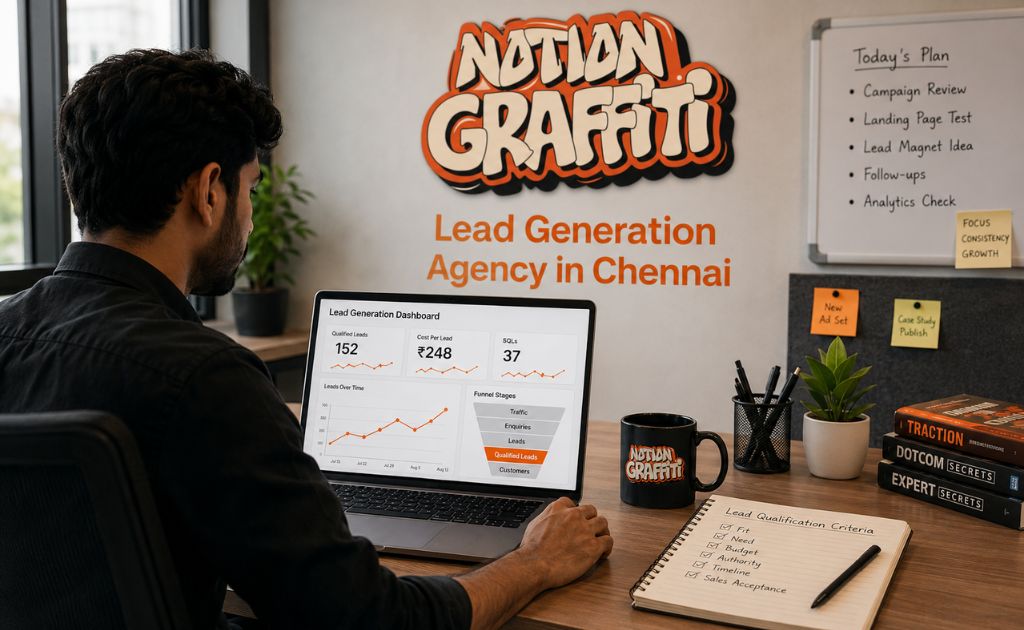
More leads is not the same thing as more customers.
A Chennai manufacturer signs a lead generation agency. The dashboard fills with 400 enquiries in a month and everyone congratulates each other. Three months later the sales team has closed four deals – and half those enquiries were people who tapped an ad by accident, wanted a price the company doesn’t offer, or sat 900 kilometres outside the service area.
The agency didn’t fail on its stated terms. It promised leads and delivered leads. The problem is that “lead” was never defined, quality was never measured, and nobody agreed in advance what success looked like at the sales end rather than the form-fill end.
This guide is for the person about to sign that contract: what a lead generation agency in Chennai actually does, how leads get qualified, what it genuinely costs, how performance should be measured, and the questions that separate a partner from a vendor.
Table of Contents
What Does a Lead Generation Agency in Chennai Do?
A lead generation agency in Chennai identifies your ideal customers, reaches them through channels such as Google Ads, Meta Ads, SEO and WhatsApp, captures their enquiries through landing pages and forms, qualifies those enquiries against agreed criteria, and passes sales-ready prospects to your team – while tracking cost per qualified lead and revenue outcomes, not just enquiry volume.
That last clause is where engagements quietly go wrong. An agency reporting only enquiry counts is reporting its own activity. An agency reporting cost per qualified lead is reporting your business.
How a Lead Generation Agency Actually Works
A credible engagement follows a recognisable sequence. If an agency can’t describe its version of this in a first meeting, that is information.
- Business and offer research. What you sell, at what price and margin, and how long your sales cycle runs. A ₹8,000 product and a ₹40 lakh contract need completely different economics.
- Ideal customer definition. Industry, company size, decision-maker role, location, budget band. In B2B this is your ICP.
- Channel strategy. Which platforms match where your buyers already are – and which to deliberately skip.
- Acquisition. Campaign build, creative, keywords, audiences, budgets.
- Landing page and offer. Where traffic arrives, and the reason someone would fill in a form on it.
- Lead capture. Forms, click-to-call, WhatsApp chat, or all three.
- Qualification. Filtering enquiries against agreed criteria before they reach sales.
- CRM and handoff. Leads delivered into a system your sales team actually uses, with source and campaign attached.
- Sales feedback loop. Your team reports which leads were genuine; that data goes back into targeting.
- Optimisation. Budget shifts toward what produced revenue, away from what produced noise.
Steps 7 and 9 are the ones weak agencies skip – and they decide whether month six beats month one.
Lead Generation Channels: What Each One Is Good For
No channel is universally best. The right mix depends on whether people are already searching for what you sell.
SEO. Builds durable organic visibility and captures people actively searching. Slow to start, compounding over time, and traffic doesn’t stop when payment does. Strongest for established demand categories – see how SEO services fit a longer-horizon lead strategy.
Google Ads. The fastest route to high-intent demand. Someone typing “invisible grills Chennai” has a need right now. You pay per click and can be live within days, provided search volume for your category exists.
Meta Ads (Facebook and Instagram). Creates demand rather than capturing it, through audience targeting and creative. Powerful for consumer services, education, real estate and home improvement – categories where people don’t search but do respond to a compelling offer.
LinkedIn. For B2B where you need specific job titles, seniorities or company sizes. Cost per lead runs far higher than Meta, but the leads can be worth far more.
Content marketing. Captures informational demand and builds credibility that shortens sales cycles.
Landing pages. The conversion layer. Excellent traffic arriving on a slow or untrustworthy page produces poor results regardless of campaign quality.
WhatsApp, calls and forms. In Chennai a large share of enquiries arrive by phone or WhatsApp rather than a form. If those aren’t tracked, your reporting is wrong and you will underestimate your best channel. WhatsApp marketing and click-to-chat ads cut friction sharply for local service businesses.
SEO vs PPC for Lead Generation
| Factor | SEO | PPC (Google/Meta Ads) |
| Speed | Months to build meaningful visibility | Days to weeks after setup |
| Long-term value | Compounds; traffic persists | Stops when spend stops |
| Intent | Mixed – informational to transactional | High intent on search; interest-based on social |
| Cost model | Fixed monthly effort, no per-click cost | Pay per click/impression plus management fee |
| Control | Indirect; you influence, Google decides | Direct; budgets, audiences and bids are yours |
| Scalability | Limited by search volume and competition | Scales with budget, until CPL rises |
| Best suited for | Established demand, long-term cost efficiency | Immediate pipeline, testing offers, seasonal pushes |
Most Chennai businesses are better served by a combination. Paid funds the pipeline while SEO is still building; SEO eventually reduces dependence on ad spend. Running only paid means lead flow ends the day you pause the budget. Running only SEO means six quiet months. Performance marketing and organic work are usually planned together for exactly this reason.
What Actually Makes a Lead “Qualified”?
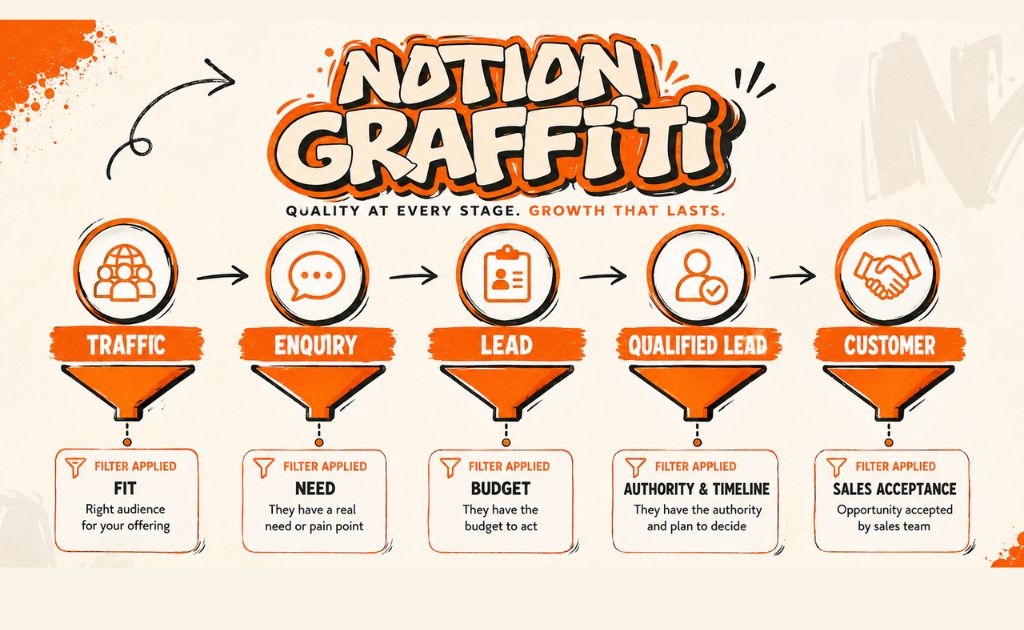
This is the section worth reading twice, because almost no agency page in Chennai discusses it honestly.
There is a chain, and each link loses volume: Click → Enquiry → Lead → Qualified Lead → Opportunity → Customer
An enquiry is anyone who submitted a form or rang the number. A lead is an enquiry with usable contact details and real interest. A qualified lead meets criteria you agreed in advance:
- Fit – they are the kind of business or person you actually serve
- Need – they want something you sell, not something adjacent
- Budget – the price band is realistic for them
- Authority – they can decide, or can reach the person who does
- Timeline – they intend to act within a period that matters to you
- Location – they are within your service area
- Sales acceptance – your team, having spoken to them, agrees they were worth the call
In B2B this is formalised as MQL and SQL. A Marketing Qualified Lead matches your target profile and has shown real interest. A Sales Qualified Lead has been contacted and confirmed as a genuine opportunity. The gap between those two numbers is the most useful diagnostic in your funnel: if 300 MQLs produce 12 SQLs, targeting is wrong, and extra volume won’t fix it.
Run the arithmetic. Two hundred low-intent enquiries at ₹150 each costs ₹30,000; if 5% are qualified, you have 10 real conversations. Twenty tightly-targeted enquiries at ₹800 each costs ₹16,000; if 60% are qualified, you have 12 real conversations – for less money and far less wasted sales time. Twenty qualified leads genuinely can beat two hundred enquiries.
Before signing, write down your qualification criteria and get the agency to agree to them in writing. If they won’t, you have learned something important.
How to Measure Lead-Generation Performance
Ask for these, in this order of importance:
| Metric | What it tells you |
| Qualified leads | The number that actually matters |
| Cost per qualified lead (CPQL) | True efficiency – the metric agencies avoid |
| Lead-to-sale conversion rate | Whether the leads convert or just accumulate |
| Customer acquisition cost (CAC) | Total marketing cost per customer won |
| Revenue attributed | Rupees generated, mapped to channel |
| ROAS | Revenue per rupee of ad spend |
| Cost per lead (CPL) | Useful only when read next to CPQL |
| Appointment / site-visit rate | Early quality signal before deals close |
| Conversion rate (page and campaign) | Where the funnel is leaking |
| Leads (raw) | Activity, not outcome |
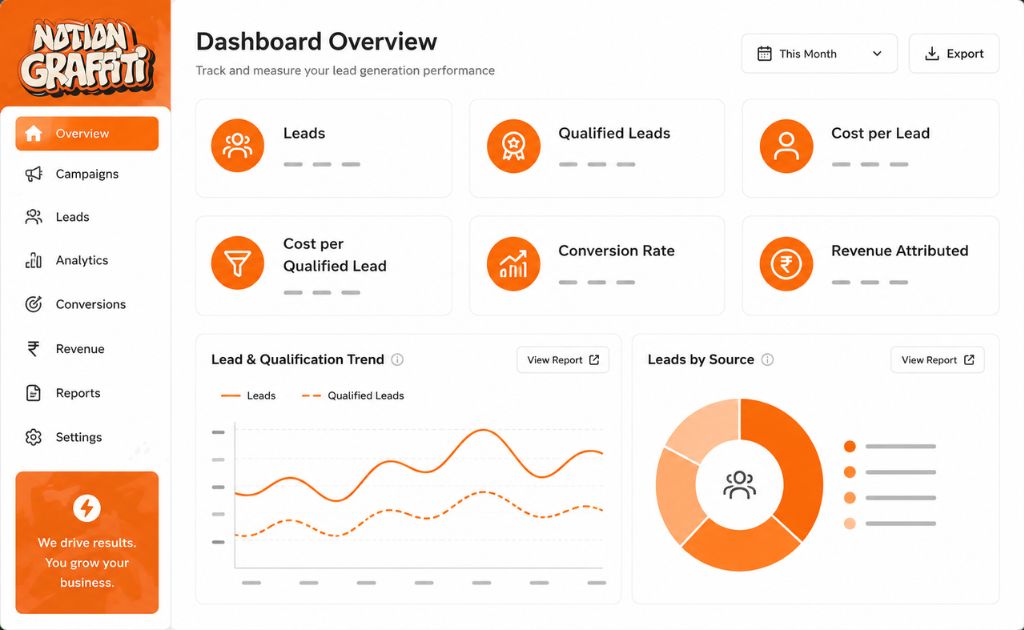
An agency judged only on lead volume will optimise for lead volume – broader targeting, weaker offers, more enquiries, worse quality. Judge on cost per qualified lead and the incentives correct themselves. This requires real measurement: Google Ads conversion tracking,GA4 key events, Google Tag Manager, plus call and form tracking so phone and WhatsApp enquiries appear in reporting rather than vanishing.
How Much Does Lead Generation Cost in Chennai?
There is no single number, and any agency quoting one before understanding your business is guessing. What you can insist on is that costs are broken into three separate buckets:
1. Agency fee. The retainer for strategy, campaign management, creative, optimisation and reporting. Notion Graffiti publishes SEO pricing openly – its SEO page states monthly costs from INR 9,500 to INR 30,000 depending on goals and competition. Paid campaign management is normally quoted after a scoping conversation, because workload varies by channel count and complexity.
2. Advertising spend. Money paid directly to Google, Meta or LinkedIn. This is not the agency’s money and should never be bundled invisibly into the fee. Insist on a separate line, and insist the ad accounts are in your name.
3. Production and technology. Landing pages, creative, video, CRM licences, tracking setup, call-tracking numbers.
Cost per lead itself is driven by industry competitiveness, channel, geographic targeting width, offer strength, landing-page and creative quality, and how strictly you qualify. Tightening qualification almost always raises CPL and lowers cost per qualified lead – the trade you generally want.
A practical rule: your maximum sustainable cost per qualified lead follows from your close rate and average deal value. Close 20% of qualified leads at ₹50,000 margin each, and every qualified lead is worth ₹10,000 to you. That number – not a competitor’s CPL – sets your budget.
How Long Does Lead Generation Take?
It depends on channel, and nobody can guarantee outcomes.
Paid acquisition can produce enquiries within days or weeks of launch, once tracking, creative and landing pages are ready. The first month is usually a learning period – early cost per lead is rarely the cost per lead you settle at.
SEO works on a longer horizon. Technical fixes and content take time to be crawled, indexed and trusted, so meaningful organic lead flow is a multi-quarter project. As Google’s own SEO documentation makes clear, no one can guarantee rankings.
A combined approach uses paid for immediate pipeline while organic visibility builds underneath, gradually lowering blended acquisition cost.
Be sceptical of any timeline stated with certainty. Competitor spend, seasonality and platform changes all move results.
How to Choose a Lead Generation Agency in Chennai
Work through this checklist:
- Relevant experience in your industry or an economically similar one
- Case studies with dates, channels and numbers – not logo walls
- A written definition of a qualified lead they will be held to
- Clear channel reasoning – why these platforms, why not others
- Tracking setup – GA4, conversion tracking, call and form tracking
- Attribution – can they tell you which channel produced revenue
- Landing page capability, and CRM integration so leads reach sales cleanly
- Reporting – what’s in it, how often, and whether it includes CPQL
- Ad account and data ownership in your name
- A sales feedback process for reporting bad leads
- Optimisation cadence – how often campaigns are actually touched
- Contract terms – notice period, lock-in, what happens to assets if you leave
- Communication – a named point of contact, not a shared inbox
12 Questions to Ask Before You Hire
- How do you define a qualified lead for a business like ours?
- Which channels would you recommend, and which would you rule out – and why?
- How will lead quality be measured and reported, not just lead volume?
- Who owns the Google Ads and Meta accounts – us or you?
- Is advertising spend separate from your fee, and shown as its own line?
- What tracking will you set up, and will phone and WhatsApp enquiries be captured?
- How often are campaigns reviewed and optimised?
- What is your process when we tell you leads are poor quality?
- How will leads reach our sales team, and can you integrate with our CRM?
- Which KPIs will appear in the monthly report – will cost per qualified lead be one?
- Can you show a case study with dates, spend context and outcomes for a comparable business?
- What happens to our accounts, data and creative if we end the engagement?
If an agency answers questions 4, 5 and 8 clearly and without hesitation, that tells you more than any portfolio.
Red Flags to Watch For
- Guaranteed lead numbers, sales or ROI. No one controls buyer behaviour. Guarantee language usually means volume delivered at the expense of quality.
- A suspiciously low cost per lead promised upfront, before anyone has seen your offer or margins.
- Guaranteed first-page rankings – Google’s own documentation states rankings cannot be guaranteed.
- No tracking setup in the proposal, and no qualification process beyond the phrase “high-quality leads.”
- Vanity metrics – reach, impressions and followers foregrounded over leads and revenue.
- No access to your own ad accounts, or accounts held under the agency’s business manager.
- Case studies with no dates, channels or context, and long lock-ins without defined deliverables.
- Inconsistent numbers across an agency’s own website. If their claims contradict each other, ask about it directly.
Our guide to the mistakes to avoid when hiring a digital marketing agency goes further on contracts and expectations.
Lead Generation Works Differently by Business Type
B2B and industrial – longer cycles, fewer but more valuable leads, LinkedIn and high-intent search, MQL/SQL discipline essential. Local services (clinics, salons, home improvement) – Google Business Profile, local search, call and WhatsApp enquiries; response speed decides the sale. Education – seasonal admission windows, parent and student as distinct audiences, awareness before enquiry. Real estate – high enquiry volume, aggressive qualification, site-visit rate as the real KPI. Professional services – credibility-led and referral-heavy. SaaS and startups – content plus paid search. E-commerce – closer to direct response, ROAS-led.
Ask any prospective agency which of these it has actually run campaigns for, and ask to see the work.
Why Chennai Businesses Need a Localised Approach
Local search and a well-maintained Google Business Profile drive a meaningful share of enquiries for service businesses here, and profile quality directly influences local visibility – which is why local SEO belongs in most Chennai lead-gen plans rather than being treated as optional.
Geographic targeting needs deliberate thought: a business serving only the western suburbs shouldn’t pay for clicks across Tamil Nadu. Call and WhatsApp conversions matter more than form fills in many categories, so tracking must cover them. Creative and landing pages often perform better with Tamil and English considered together, depending on audience. And for B2B, decision-makers concentrate around Chennai’s industrial and IT corridors – a targeting decision, not a slogan.
Why Consider Notion Graffiti?
Notion Graffiti is a Chennai-based digital marketing agency founded by Amjad Moulana and co-founded by Sriram Mohan, operating from Valasaravakkam across SEO, paid advertising, social media, content, web development and WhatsApp marketing. Rather than restate marketing claims, here is what is published and verifiable:
Documented lead-generation work. The RDB College for Women case study reports a full-funnel Meta Ads programme run April–July 2026, producing 468 qualified admission enquiries and 363 high-intent leads, at a stated cost per lead of ₹256.79 (undergraduate) and ₹215.52 (postgraduate), from 2.88 million+ reach. It also records qualitative signals – campus-visit intent, hostel enquiries, parent-versus-student engagement – which is exactly the lead-quality reporting this article argues you should demand.
Full-funnel build experience. The Aluguard Systems case study documents a 12-month engagement that began with no website and no search visibility, combining web development, SEO, Google Business Profile, content and Meta advertising, and reporting 8,000+ enquiries from paid campaigns alongside 50,900 Google impressions in year one.
Measurement literacy. The Google Ads service page specifies conversion tracking, GA4, Google Tag Manager, call tracking and form-submission tracking as standard – the infrastructure without which “cost per qualified lead” cannot be reported at all.
Transparency. A verifiable Chennai address, named founders, published business hours and openly stated SEO price ranges – all checkable.
What to weigh honestly: the published case studies are strongest in education and consumer/home-improvement categories. A business seeking specifically B2B or enterprise lead generation should ask directly for comparable work and judge it on its merits. Figures such as brands served are self-reported, as they are across this industry – ask for the underlying campaign evidence. That is the standard this guide recommends applying to every agency on your shortlist, including this one.
Review the published work on the case studies page and the wider service range on the digital marketing agency in Chennai page.
Talk Through Your Lead Generation Plan
If you’re evaluating agencies, the most useful next step is a specific conversation, not a generic proposal. Come prepared to discuss:
- What you sell, your average deal value and typical sales cycle
- Who your ideal customer is, and where they are located
- Where your leads currently come from, and which sources convert
- What you are spending now, and on which platforms
- What your website or landing page currently does with traffic
- How fast your sales team follows up
- What a good month looks like in customers, not enquiries
to work through those points and get an honest view of which channels fit your business – including the ones that don’t. No lead-count promises; a plan you can actually evaluate.
Frequently Asked Questions
What does a lead generation agency do?
It identifies your target customers, reaches them through channels like Google Ads, Meta Ads, SEO and WhatsApp, captures enquiries via landing pages and forms, qualifies them against agreed criteria, delivers sales-ready leads to your team, and reports on cost per qualified lead and revenue rather than enquiry volume alone.
How much does lead generation cost in Chennai?
There is no fixed price. Costs split into three parts: agency fee, advertising spend paid directly to platforms, and production or technology costs such as landing pages and CRM. Notion Graffiti publishes SEO pricing from INR 9,500 to INR 30,000 per month depending on goals and competition; paid campaign management is scoped per business. Always ask for the three costs itemised separately.
What is the difference between a lead and a qualified lead?
A lead is anyone who submitted an enquiry with usable contact details. A qualified lead also meets agreed criteria – right fit, genuine need, realistic budget, decision-making authority, workable timeline, correct location – and has been accepted by sales as worth pursuing.
What is the difference between MQL and SQL?
An MQL matches your target profile and has shown genuine engagement. An SQL has been contacted by sales and confirmed as a real opportunity. The ratio between them is the quickest way to spot targeting problems.
Is SEO or Google Ads better for lead generation?
Neither universally. Google Ads captures existing high-intent demand quickly but stops when spend stops. SEO takes months but compounds and lowers long-term acquisition cost. Most businesses run paid for immediate pipeline while organic visibility builds.
How long does lead generation take to show results?
Paid campaigns can produce enquiries within days or weeks of launch, though month one is typically a learning period. SEO usually needs multiple quarters. No agency can honestly guarantee timelines, lead counts or rankings.
How do agencies measure lead quality?
Through criteria agreed in advance, cost per qualified lead, sales acceptance rates, appointment or site-visit rates and lead-to-sale conversion – plus a feedback loop where your sales team reports which leads were genuine.
Is advertising spend separate from the agency fee?
It should be. Ad spend goes directly to Google, Meta or LinkedIn; the fee covers strategy, management, creative and reporting. If a quote bundles both, ask for an itemised split before signing.
Who should own the advertising accounts?
You should. Ad accounts, analytics properties and campaign data belong under your business’s ownership with agency access granted. This protects your historical data and conversion learnings if you change partners.
Can a lead generation agency handle B2B leads?
Yes, though B2B needs different methods – longer cycles, LinkedIn and high-intent search, tighter ICP definition, MQL/SQL tracking. Ask specifically for B2B case studies rather than accepting general claims.
What are the biggest red flags when hiring a lead generation agency?
Guaranteed lead numbers, ROI or rankings; unrealistically low CPL promises; no tracking setup; no qualification criteria; refusal to give you ad-account ownership; undated case studies; and reporting built around impressions and followers rather than leads and revenue.
How do I choose a lead generation agency in Chennai?
Shortlist on relevant, dated case studies rather than superlatives. Require a written definition of a qualified lead, itemised fees and ad spend, account ownership in your name, documented tracking, and reporting that includes cost per qualified lead – then judge the answers to the twelve questions above.
Recent Comments